Techotrix

Category: RF Series Moisture Instrument

Sensortech Systems, Inc. Moisture Measurement & Process Control

  • Sampling Series

    Sampling Series

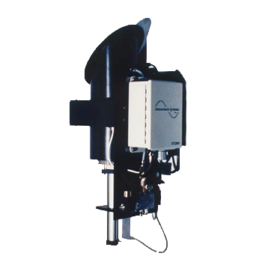
    The product enters a sampling tray or chamber where the moisture measurement is taken. A digital output of the Processor Unit is used to control the fill and purge method of sampling. Sampling Sensors can be found in production processes where a small sample is taken from a large flow of product or where it is not possible to maintain a reasonably constant flow of product over the sensor.

    Moisture Sampling Sensors:  Common types of Sampling Sensors include a Piston Purge, Air Purge, and Down Chute Application Interface that uses different techniques of sampling the product.

    Piston Purge Moisture Sensor: The Piston Purge Sampling Series utilizes a hydraulic piston mechanism allowing product to enter the sampling chamber for measurement and purging the chamber after the measurement has been taken. The piston-purged sensor resembles a large syringe. A 150mm diameter fiberglass lined chamber forms a cylindrical sensor. A piston retracts allowing the chamber to fill with product. After measurement, the piston advances, returning the material to the product flow.

    Air Purge Moisture Sensor: Likewise, the Air Purge Sampling Series uses a similar fill and purge technique using compressed air in lieu of the hydraulic piston mechanism. Many low-density powdered products are conveyed by blowing or sucking through pipelines. This is known as pneumatic conveying and is widely used in the grain processing industry. By simply cutting a hole in the pipeline, the sensor may be saddle mounted with clamps. The angled sensor captures a small proportion of product. When full, a measurement is taken and a solenoid valve is activated to evacuate the sample chamber with compressed air.

    Down Chute Moisture Sensor: The Down Chute Sampling Series allows product to fall into the sampling tray and purges the product with a blast of compressed air. The down-chute sensor is a sealed planar sensor with low side walls forming a sensor tray. The tray is inserted into a vertical gravity-fed chute through a rectangular hole. The vertical flange bolts to the chute wall. Product free falling down the chute fills the tray to overflowing. A measurement is taken and then an air-purge nozzle empties the tray.

    Time Sampling Moisture Sensor: The Sampling Series, when used in timed sampling mode, provides a digital output to activate a solenoid valve. This mode provides two programmable functions, fill time and purge time. Fill time is a do-nothing period of time to allow the sampling chamber to fill with product. Fill time is followed by a fixed 1-second measurement time which is then followed by the purge time during which the digital output is set high for the programmed duration. The instrument display is updated following the measurement interval and held until the next measurement.

  • PMT-330 Handheld

    PMT-330 Handheld

    Portable moisture testers satisfy a variety of needs across the spectrum of manufacturing industries. For more than 30 years Sensortech has been the standard of excellence in RF moisture testing and the latest version of the PMT-330 continues that tradition. The design of the PMT-330 is based on the technology used in Sensortech’s IMPS-4400 Moisture Profiling System and is similar to having a portable version of its advanced technology. Using a Radio Frequency Dielectric Measurement allows the PMT-330 to penetrate the surface of the intended target and receive an accurate measurement of its moisture composition. This is a powerful capability packed into a hand-held device and why it has been the standard of portable moisture testing for so long.

  • Flange Mount

    Flange Mount

    The product glides on the sealed Teflon or ceramic surface of the sensor where the moisture measurement is taken. The sensor is fixed in place using the flange and is placed in critical points throughout your production process. Performs well in high vibration environments and is ideally suited for granular or powdered products. Typically used in bins, hoppers, planar (sloping/vertical/horizontal) surfaces and conveyor drop-off points.

    Sealed Moisture Sensor: In a sealed sensor, an insulating material supports the center electrode, at the same time forming a flush sealed surface. Choice of insulator material depends on many factors including sanitary requirements, wear resistance and operating temperature.

    Teflon Insulator: Materials include Teflon (PTFE) for food-grade applications. Teflon withstands high temperature (260°C) and is nonstick, but is quite easily worn down by abrasive materials.

    Polyethylene Insulator: Ultra-high molecular weight polyethylene (UHMWPE) is also food-grade and much harder wearing than Teflon, but is limited to relatively cool applications (60°C).Ceramic Insulator: High alumina ceramic is another useful material. It is extremely hard wearing, second only to diamond, but is brittle and not accepted in food applications. The most important consideration for any insulating material is that it must be dimensionally stable and absolutely non-hygroscopic.

    Sensor Application: The most common application is located in the side of a hopper or bin such that the inside surface is flush with the inner wall of the vessel. In hopper/bin applications, it is important to maintain a fairly constant height of material above the sensor, particularly if the material is compressible since density changes as well as moisture content will influence the dielectric value. Another thing to consider with bin applications is that the flow of product is maintained over the sensor at all times. A static build-up of product on the sensor will obviously impair accuracy.

    Geometries and Sizes: The Flange Mount Series is available in numerous geometries and sizes. These varieties of options give the Flange Mount the versatility of being placed exactly where your moisture measurement is needed.

  • Sled Sensor

    Sled Sensor

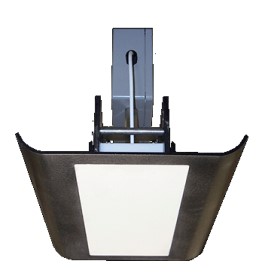
    The product passes underneath the sensor where the moisture measurement is taken. The sled hangs from hinged arms allowing it to maintain a parallel position to the conveyor and to level the product for consistent measurement. Maintaining a depth of product greater than the penetration of the RF field is particularly important for the application. Typically used on conveyors (sloping/horizontal).

    Planar Moisture Sensors: Planar sensors may be used to measure powdered products on belt conveyors. A scraper is located above the conveyor to level the product. A planar sensor is attached to the down-stream side of the scraper approximately 6mm above the leveled product. In some cases the scraper may be adjusted up or down to regulate flow. In this case, the sensor moves with the scraper, always maintaining a 6mm product/sensor gap.

    Sled Sensors: Often, the nature of the product does not allow easy leveling. In these cases, sometimes a sled sensor may ride on the product, essentially maintaining a constant sensor/product gap. The sled hangs from dual arms on each side forming a parallelogram action to maintain the sensor parallel to the conveyor.

    Depth of Penetration: Using the scraper method or the sled, it is important to maintain a depth of product greater than the penetration of the RF field, particularly for metal conveyors.

    Skid Plate Sensor: Other varieties of Sled Series include the Skid Plate Application Interface that has a smooth abrasion proof surface designed to have a gentle impact on sensitive products. A Skid Plate Sensor is typically used on board lines where the board is not self-supporting and the sensor must be in contact. The illustrated Skid Plate has a high-alumina contact window flush mounted in a hard anodized aluminum plate offering a perfectly smooth surface so not to mark board it contacts.

  • Pipe Line Sensor

    Pipe Line Sensor

    The product flows through the pipeline where the moisture measurement is taken. The Application Interface is made up of a pipe with attached sensor electronics that is integrated into the pipeline framework of the production process. An optional heater jacket ensures that the product does not solidify. Typically used with production processes manufacturing fluids, pastes, and confectionery applications. Applications include caramel, molasses, molten candy and fudges.

    Common Pipe Line Sensors: The most common pipeline sensor is 50mm diameter (other sizes available) with a slight flat side incorporating a button sensor (bottom right image). This type of sensor is good as long as product flows uniformly throughout the section of pipe.

    Product Temperature: If side-wall build-up occurs it is a problem. Most confectionary products flow through the pipes at very elevated temperatures, typically 120°C – 140°C. At the beginning of a production run, the pipe may be cold and a layer of product immediately forms on the inside of the pipe. This layer may never melt off throughout an 8 hour production run. Running hot water through the system prior to production is helpful. Some systems use steam jacketed piping. If this is not possible, a coaxial sensor should be considered (bottom left image).

    Coaxial Pipeline Sensors: The coaxial sensor’s electric field is radial from the center electrode to the outer pipe wall. Thus the electric field must penetrate moving product, even if a build-up occurs.The main disadvantage of a coaxial sensor is that it normally needs removing from the process for cleaning and some users do not like having an obstruction in the pipeline.

    Pipeline Heater Jacket: A heater jacket option surrounding the pipe is available upon request. In this case the pipe is electrically heated to just below the normal operating temperature to ensure product does not tend to solidify.

  • Open Frame Sensor

    Open Frame Sensor

    The product passes over the sensor where the moisture measurement is taken. The open-frame minimizes build-up of debris by allowing excess product to fall through it and is commonly used for applications having extreme temperatures, excessive vibration, or other harsh environments. Typically used between conveying belts or rollers and In-Kiln locations.

  • KJD-7000

    KJD-7000

    A kiln jam is one of the most feared events that may happen in gypsum board manufacturing. Fortunately a rare occurrence, but with the trend to lighter and ultra-light board weights, jams are occurring more frequently.

    Potential significant losses include:
    • Product loss inside the dryer
    • Lost production during clean-up
    • Kiln damage from jam or clean-up
    • Operator injury from unsafe conditions when attempting to locate and clear jams

    The key to minimizing losses is rapid kiln-jam detection.
    The KJD-7000 enables gypsum board manufacturers to continuously monitor all decks and board streams and identify the exact location of a kiln jam as it happens. Early detection ensures quick clean up with minimum loss of product and production time.

    Unlike earlier mechanical systems, the KJD-7000 system is non-contact and will not impede board movement Build-up of silicone emulsions and siloxanes, which effect optical systems, have no influence on the RF sensors of the KJD-7000 system.

    The KJD-7000 system empowers plant staff to monitor board flow status online from the convenience and safety of the office, away from the kiln.

    MONITOR ALL DECKS WITH KJD-7000 SOFTWARE

    Normal Board Flow
    When boards are running normally, the system displays the deck levels in green.

    Potential Board Jam
    When the system detects a nominal out-of-parameter board presence or absence, the deck position is indicated in yellow.

    Actual Board Jam
    A red signal alerts a definite jam detection. Knowing the exact deck level and board position operators can immediately initiate a jam contingency plan to safely rectify the issue and resume production in minimal time.

  • IMPS-4400

    IMPS-4400

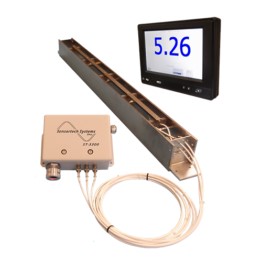
    Sensortech’s IMPS-4400 provides board product manufacturing plants the most advanced level of moisture profiling. Using the non-contact Radio Frequency Dielectric Measurement Technology in an arrayed framework allows the IMPS-4400 to deliver the complete picture of your products’ moisture composition. This array can span a wide area allowing up to 128 sensors to measure the true moisture composition of your product. Our proprietary software takes process control to superior levels of productivity. Graphical displays allow a full diagnostic view of moisture profiles that identify issues before they become problems.

  • ST-3300

    ST-3300

    The ST-3300 is the next generation of process moisture measurement and control. Sensortech Systems’ patented radio frequency measurement principle enhanced by all-digital phase lock loop signal conditioning presents a radically improved standard of resolution and stability. Signal processing capabilities are integrated into the transmitter electronics, which interfaces directly to your PC, PLC, HMI, or other preferred platform. User-friendly configuration software manages the operation of the ST-3300 through your PC.